
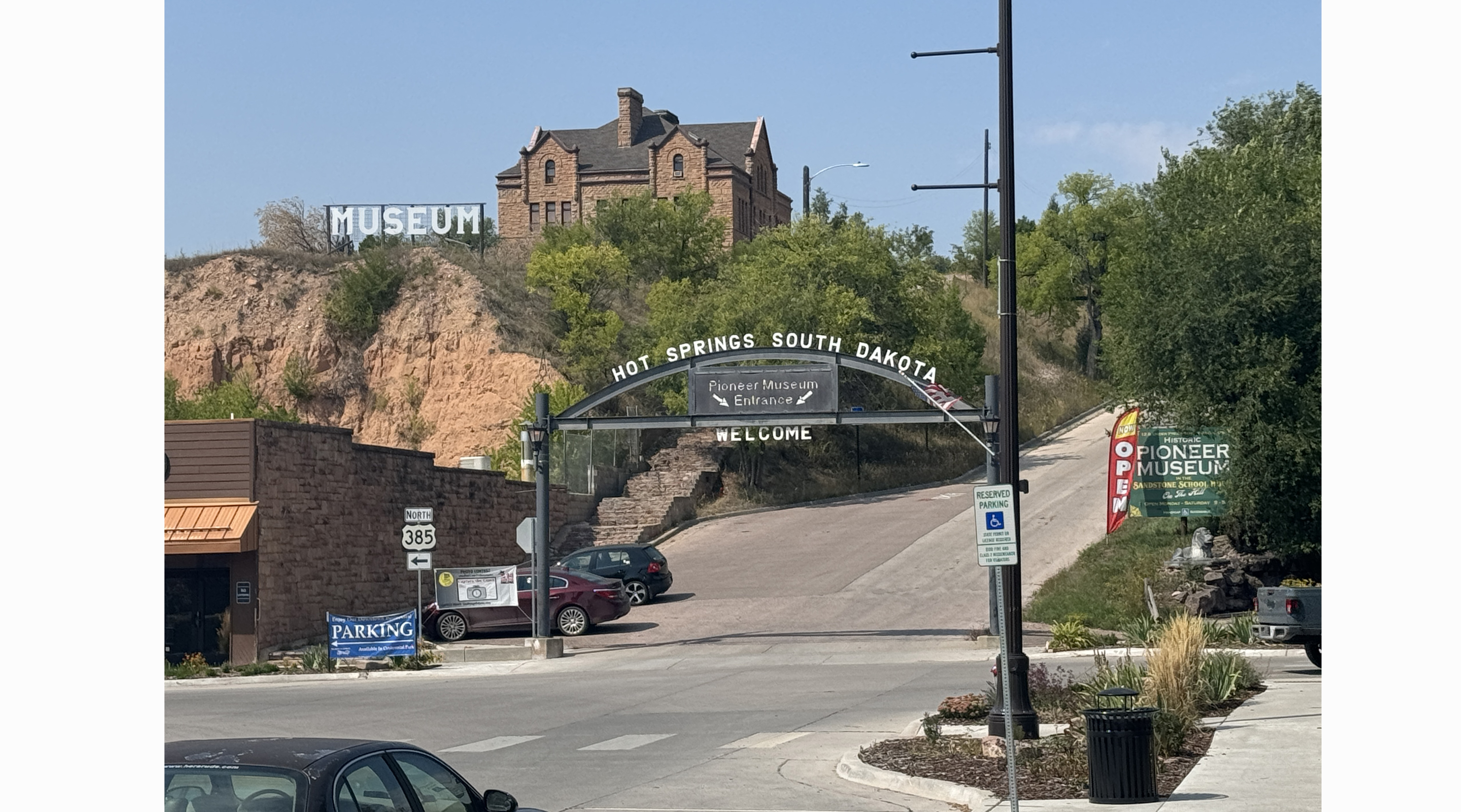
HOT SPRINGS – A total of 382 people responded to an online survey that was conducted by ENGAGE South Dakota which was designed to gather input from current Hot Springs residents about the future direction of their community. The survey was a joint effort of the Allene R. Chiesman Center for Democracy and South Dakota News Watch in collaboration with Southern Hills Economic Development Corporation (SHEDCO).
“I was very impressed with the number of responses we got,” said Andrea Powers, SHEDCO Executive Director. “I thought the results showed an overall positive attitude about the community and the direction we are headed, and that people would like to see the city, the chamber, and economic development come together with a unified approach around a highly defined direction for the community.”
Ninety-seven percent, or 369, of the respondents were from Hot Springs, and answered a total of 23 questions, which included things like: Why do you live in Hot Springs? What are you biggest concerns where you live? What should city leaders prioritize in the coming years? What suggestions do you have for fellow citizens to build a stronger community?
According to the survey, the biggest reasons for Hot Springs residents choosing to live in that community are proximity to family (31%), employment opportunities (28%), recreation opportunities (24%), community feel (27%), low crime rate (25%). Additional offered responses included, healthcare,schools,shopping, housing, spouse employment, and low cost. About a quarter (26%) of respondents offered additional reasons, such as the were born and raised there, chose to retire there, the beauty of the surrounding area, and the peace and quiet.
When asked what, if anything, would cause them to leave, some respondents said they would leave if offered a better paying job or if their children needed more opportunities in the future. Others indicated property taxes and crime as other reasons to move away.
Demographically, there was a relatively normal distribution of respondents, but leaning somewhat older. Three-fifths of the Hot Springs community members who responded live in city limits. Nearly four-fifths live in a house that they own, and a plurality have been in the area for less than ten years. Almost all of the respondents are White, but there are a significant number of Native Americans. The majority of respondents have a household income between 50,000 and 150,000, with a median right around 75,000. Only a third are male, and a slight majority (52%) work full time; about 30% are retired. Threefourths of the people who do work are employed locally. More people have children than don’t, but not many more.
While there were a few respondents who had lived in Hot Springs more than 50 years, at least 1/3 of the respondents were new residents and had only lived in the area 10 years or less.
The residents of Hot Springs find housing to be the biggest concern, other concerns that were more likely to be considered “major” included business development, labor shortage, and workforce development. They are definitely collectively the least concerned about crime, and there was some polarized responses when it came to childcare.
Most residents agreed with statements that Hot Springs is a good place to retire and that they are hopeful about the future of Hot Springs. There was some indication from respondents however that there is some dissatisfaction with the community’s appearance.
Overall, the respondents feel they can make a difference in the community, but there’s a notable percentage who indicate the dissatisfaction with the performance of local/city government.
Following are just a few of the comments shared by respondents when asked: “What issues do you think your local community leaders should prioritize for the next several years?”
• “Beautification after the highway project. Encouraging businesses to improve their appearance and landscaping so that tourists and visitors want to come here. Weeds growing in sidewalks and in front of businesses does not create a welcoming or impressive environment.”
• “Economic development which includes the labor force, affordable housing and childcare. The past few years with the construction on top of the pandemic have been devastating in many ways. We need to grow our tourism potential which requires more ‘destination’ type activitiesmore events in the evening; more recreational activities-mountain bike trails, safer walking areas, etc.”
• “Identify a positive, cohesive, growth minded strategic plan that gets implemented. Keeping the natural beauty and Victorian charm while updating the appearance and function of our town. Continue to spruce up downtown, develop more affordable housing for young families, define Hot Springs’ image, draw in outside talent but also grow our own workforce through education and apprenticeship, connect biking and hiking trails. “
• “Metered growth. How do we grow and improve the community without changing it and/or growing to the point of no longer having the values that people came here for. Also, a close look at skyrocketing property tax rates, and what that is doing to multi-generational natives and landowners.”
In another area of the survey which focused on general statements about the community, Hot Springs residents largely disagree with the statements that there are a variety of housing options available, that home prices are affordable and that rental costs are affordable. However, they are generally satisfied with law enforcement and other emergency services.
When the survey asked what suggestions respondents had for local community leaders in making progress in areas of concern, some of the answers proved how far apart residents are in their perspectives on what should be done.
For example, one respondent stated: “The promotion of Hot Springs as a retirement community will doom it to failure;” while the next respondent stated: “This is a RETIREMENT TOWN – keep it that way! We cater to the elderly.”
Overall however, most comments provided by respondents in the survey demonstrated a sincere desire to the see the city move forward in a positive manner, with one respondent stating: “Hang in there! It’s hard work.”
“I appreciated the thoughtful comments about how to further develop the assets of Hot Springs. That says to me that community members are thinking about what they want Hot Springs to be five and 10 years in the future,” Powers said. “I believe we are fast approaching a time when either we will make decisions about how Hot Springs looks and feels, or others outside the community will make those decisions for us. Hopefully this process creates an opening for that work to proceed.”
A stakeholders meeting was held this past Monday, Oct. 7, where the findings of the survey were revealed and participants broke into small groups to discuss. Watch for more information about that meeting in the future.