
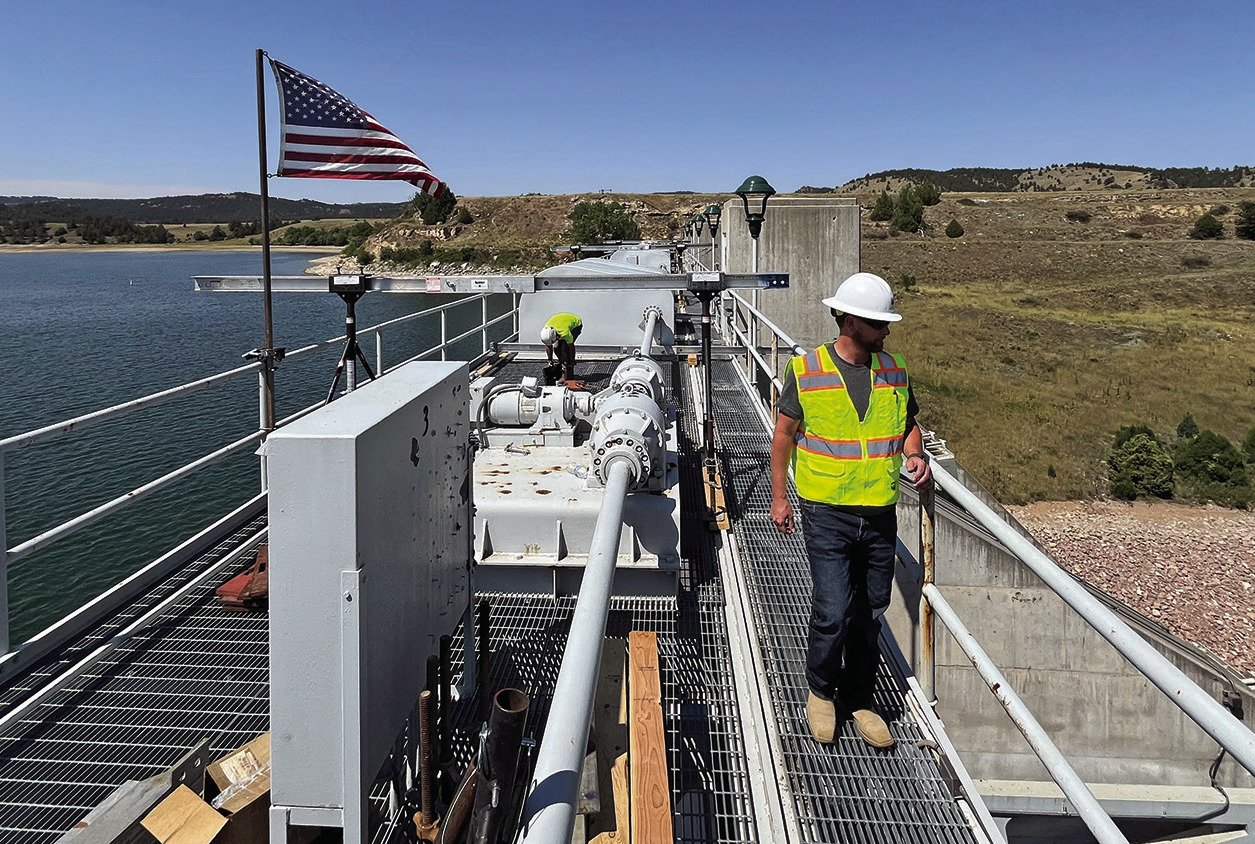
HOT SPRINGS – Contrary to some generallyheld beliefs this summer, the large-scale construction project currently underway at the Angostura Dam is not impacting water levels in the reservoir.
Despite elevation levels at Angostura being the lowest since April 2008, the U.S. Bureau of Reclamation (USBR) project, which started back in March, does not require releasing additional water from the reservoir for it to be performed. In fact, the release of water in the spillway would only hamper the work that is being done.
Current elevation levels at Angostura are around 3,171 feet, which is about five feet lower than last year at this time. The current reservoir water capacity is just over 50% of full, which is an elevation of 3,187 feet.
According to information from the USBR, the contract for the $10.4 million project was awarded to Tribal One (T1) Construction LLC, of North Bend, Oregon, which has had anywhere from 20 to 30 workers, including sub-contracted workers, onsite since early this spring. The project aims to improve access by upgrading the old road to the stilling basin and addressing freeze-thaw deterioration by removing and replacing damaged concrete on the face of the dam. Construction was projected to take a total 955 days, but thanks to favorable working conditions this past spring and summer, the USBR is working to try and finish ahead of schedule.
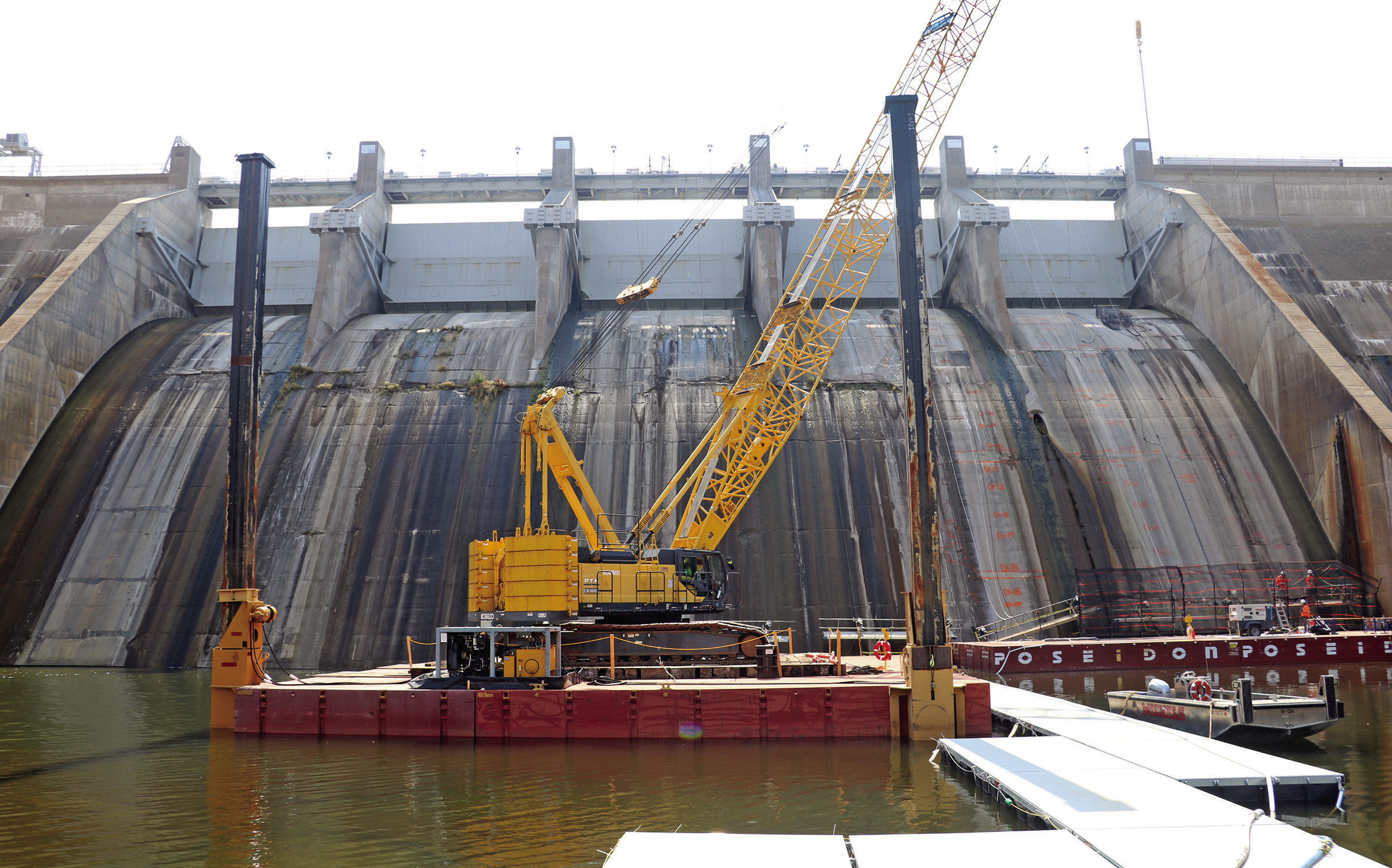
Steven Fritch, who works for the USBR out of the Rapid City field office, said the first order of business was to essentially build a new road into the spillway, since the original 1940s-built road into that area was nonexistent. Once the road was in place, floating barges were brought down the road and placed on the spillway pond. A large crane was also taken down the road and set onto the barges and is being used to hoist equipment onto the dam. A scaffolding system was then constructed and completed in August, which has allowed for the actual repair work to finally commence earlier this month.
In describing the repairs, Fritch said its the first time this kind of work has been done on the dam to this level since it was completed in 1949, and represents the most significant repairs since 2002 when some minor concrete work was done during a gate rehabilitation project.
The overall purpose of the project is to lengthen the life of the 76-year-old composite dam, which is considered a part earthen and part concrete gravity dam, similar to those dams found on the Missouri River.
Fritch said that now, since the scaffolding system is in place, workers are beginning to address the spalling, or broken chunks of concrete, on the face of the dam. These blemishes, Fritch said, create cavitation, which is the formation of vapor bubbles within the water and cause further deterioration of the concrete. This project will see workers using hydrodemolition, which is a concrete removal technique that utilizes high-pressure water to clean out the areas of spalling. Rebar will then be doweled into the areas and later filled with shotcrete, which is a type of concrete that is sprayed instead of poured. In addition to the concrete repair, work is also being done to control water seepage by sealing cracks, joints and leakage points.
Darwell White, who is the project manager for T1 Construction and who has worked on dams all over the United States, said the biggest challenge for the Angostura Dam project was in gaining access to the face of the dam, which is why the first few months of the project were spent in building a road into the spillway. Now that the infrastructure is in place, work should move along smoothly and ahead of schedule.
Fritch said work on the project generally takes place six days a week, and should continue into November when they will stop due to cold temperatures. If reservoir levels allow, work will resume in either late spring or early summer.