
‘Prepackaged wastewater treatment plant’ option to again be discussed at Oct. 19 meeting
NOTE: This is an edited version of the originally printed article, which contained incorrect information regarding Suzanne Givler's recommended alternative, which is to upgrade the wastewater plant in town and then pipe the treated effluent to the existing lagoons. The original article implied that her recommendation was to upgrade the facility and then dump the treated effluent into the river. We apologize for the error and for any confusion it caused.
HOT SPRINGS – At last week’s regular meeting held on Monday, Oct. 5, the Hot Springs City Council unanimously approved a new Wastewater Reservoir and Irrigation Agreement with Gary and Sharon Romey, which was required before the City of Hot Springs could move forward with its needed wastewater facility improvements.
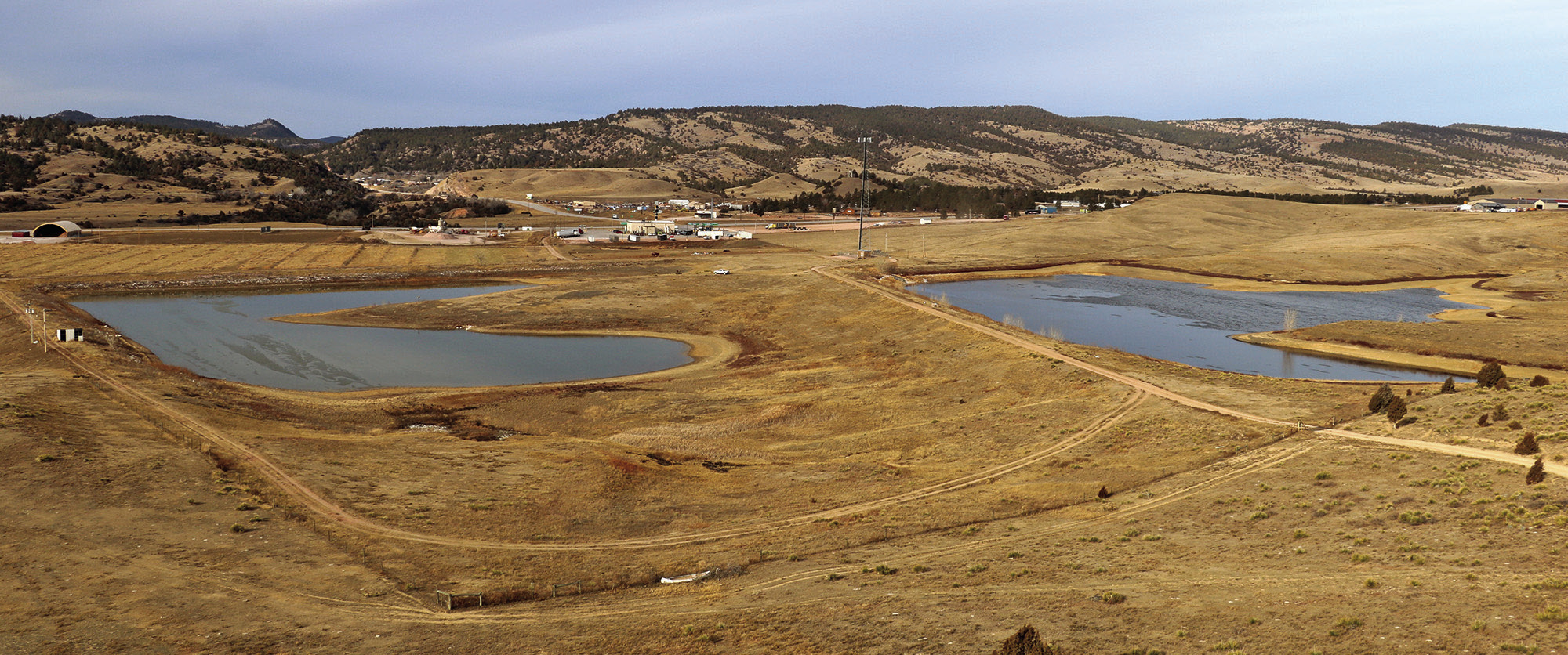
Earlier this year, after a pair of public hearings and much discussion, the Hot Springs City Council voted to go ahead with a two-phased plan to continue utilizing the existing method of piping wastewater out to the reservoirs on the Romey property, five miles east of town, for eventual surface discharge. However, doing so will require replacing all of the original 10-inch PVC pipe to 18-inch, while also adding aeration capabilities to the facilities on the Romey property. The upgrades to the pipes and to the ponds on the Romey property is because the town’s sewage will no longer be treated at the in-town facility but rather at the ponds themselves.
The original recommended plan discussed at the first public hearing held on December 12, 2025, called for a Moving Bed Biofilm Reactor (MBBR) process at the plant that would make the effluent safe enough to empty into nearby Fall River. However, after the vast majority of the participants in the public hearing opposed the discharge of treated effluent into Fall River, the engineering firm (AE2S) took a second look at the situation and additional an additional option of continuing to utilize the reservoirs, which ended up being their preferred alternative due to its simplicity and lower operating costs.
In April 2026, the City of Hot Springs was approved for a DANR-offered loan totaling $9.17 million at 4% for 30 years to cover the first phase of the planned improvements. The city however has yet to officially accept the loan offer, with the pending agreement with the Romeys as one of the things holding up the process. The second phase of the project, which will have its own separate funding request later in the process, will be for approximately $18 million. If the city is forced to rely on loans for 100% of the two phases – totaling around $27 million – users would likely need to pay an additional $90 to $100 per month until the two loans are paid back. The hope however is that the city will qualify for either loan forgiveness or grants to cover a portion of Phase 2.
As outlined in the recently approved 14-page Romey Wastewater Reservoir and Irrigation Agreement –– which Mayor Bob Nelson had seen around 20 different versions over the past few months but is now agreeable by everyone involved –– the purpose of the new document was multi-faceted to not only facilitate the continued lease of the land located east of Maverick Junction but to also define the ownership of the reservoirs, improvements and irrigation equipment. Additionally, the agreement also facilitates the usage of the treated effluent through the Romey’s use of irrigation on privately owned lands.
One of the items of note, according to Mayor Nelson, is the term of the agreement which is 40 years, commencing Oct. 5, 2026 though October 2066, and then renewed automatically for an additional 40 year, unless earlier terminated upon mutual consent of both parties.
Mayor Nelson said the decision to go with 40 years was significant to ensure that the agreement was in place for the full term of the financing that is being utilized for the improvements through the state.
Also of importance within the agreement, according to Mayor Nelson, was identifying the infrastructure responsibilities at the wastewater treatment reservoirs.
In that regard, Exhibit B of the agreement reads as follows:
City Infrastructure Responsibility: 1) Upper reservoir including aeration and stabilization basins, blower building and all necessary electrical and communications infrastructure for the system operation.
2) Lower reservoir including pump inlet, pump, motor, pump controls, and pump shed.
3) Influent pipe, inlet/outlet structures, internal piping between reservoirs including the piping for the purpose of transferring water between the reservoirs and the flood irrigation pipe up to the reservoir boundary fence (not the boundary with the gravel pit).
4) Piping from pump to the irrigation storage tank.
5) Irrigation storage tank. 6) Any valves immediately adjacent to the irrigation storage if deemed necessary to be in place in the final design.
7) Monitoring wells flood irrigation, five (5) ea.
8) Monitoring wells pivot area, three (3) ea.
Romey Infrastructure Responsibility:
1) All valves and piping associated with the flood irrigation area (existing valve cluster near the entrance to the flood irrigation area has been deemed unnecessary and will be removed).
2) Piping from the irrigation storage tank to the center pivots, excluding any valves immediately adjacent to the irrigation storage tank if deemed necessary to be in place in the final design.
3) Center pivots and all associated controls and power supply.
4) Valves in the piping to the center pivots, aside from the aforementioned possible valves adjacent to the storage tank if deemed necessary to be in place in the final design.
After approval of the aforementioned agreement, Mayor Nelson reminded the council that this was the first step in accepting the financing from the state to begin the improvements and that the upcoming steps, likely to be covered at the next meeting on Oct. 19, include the bond resolution, the surcharge resolution and the engineering services agreement with AE2S.
At the upcoming Oct. 19 meeting, Mayor Nelson said there will likely be a local private individual in attendance who will speak in hopes that the council will reconsider its decision to pump raw sewage out to treatment reservoirs, and instead choose to upgrade the treatment facility in town and then pipe the treated effluent to the existing lagoons.
While not identified by name at the council meeting, the person Mayor Nelson was referring to was Suzanne Givler, whom had sent letters to the all of the council members and also had a Guest Editorial about the subject published in the Fall River County Herald-Star this past July. Mayor Nelson said that AE2S will also be at the Oct. 19 meeting to talk about their recommendations as well.
After the planned discussion at the Oct. 19 meeting is completed, and the council feels comfortable with a process moving forward, Mayor Nelson said another public hearing will likely be held in November for the Phase 2 application for funding through the state.
“My hope is that a lot of things will be happening quickly to get us started in a design for the new wastewater treatment plant,” Mayor Nelson said. The mayor also urged all of the council members, as well as the public, to educate themselves about “prepackaged wastewater treatment plants” which is what the aforementioned Givler is recommending, compared to AE2S’s recommendation of pump the sewage to the Romey property for treatment there.